The inspection notice usually arrives as a surprise. A chicken farm that has handled manure the same way for years is suddenly told to reform, and the owner faces an unfamiliar choice: keep the old method and risk another penalty, or invest in treatment that actually works. For small-scale chicken farms in rural areas, where the same practices have gone unremarked for years, the order to change can feel like a sudden and costly demand. What the notice never spells out is that both paths already cost money. Manure handling consumes fuel, electricity, labor, and time on every farm — the difference is whether that spending ends in stable fertilizer or simply disappears into the air, the soil, and the water. For farms now under this kind of pressure, the practical answer increasingly points to energy saving fermentation equipment.
There is one number that explains why chicken manure is worth treating at all. A chicken's digestive system is short and inefficient: roughly a quarter of the nutrients in its feed are absorbed, and the remaining three quarters leave the bird with the manure. That makes chicken manure one of the most concentrated organic fertilizers a farm produces — and simultaneously one of the most unstable. Spread raw or left to dry in the open, much of that nutrient value volatilizes as ammonia, drifts away as odor, and never reaches the field. The question is not whether the value exists, but how much of it survives the treatment process.
Environmental inspections of livestock farms usually come down to one standard: harmless treatment. Three outcomes have to be verifiable before manure can be considered safe to store, spread, or sell. Pathogens such as fecal coliform and roundworm eggs must be eliminated. The organic matter must be stabilized so it will not heat up, smell, or re-ferment after application. And heavy metals, where present in feed and bedding, must stay below accepted limits. Large farms are increasingly treated as point sources of pollution, which means what leaves the farm — and what runs off it — is the farm's responsibility. A pile that might have gotten hot enough is no longer an answer inspectors accept.
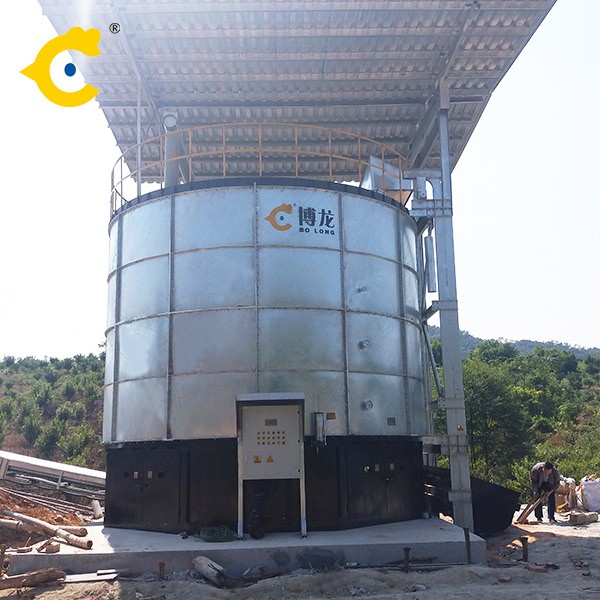
Traditional handling looks inexpensive only because its costs are never added up in one place. Open piles need turning, and each pass burns tractor fuel and labor hours, repeated for weeks on end. Sun-drying needs space and cooperative weather, and it leaves pathogens and weed seeds intact. Raw spreading means hauling water-heavy waste across the farm, then paying later in burned plants, ammonia odor, and repeated applications. On many small farms, manure quietly consumes more labor hours than any other routine task, and those hours are rarely counted. Added up over a year, the "free" manure pile is one of the more expensive materials on the farm. Energy saving fermentation equipment replaces these scattered steps with one enclosed process — the kind of low-energy manure processing that turns a daily waste stream into fertilizer without the repeated fuel and labor inputs.
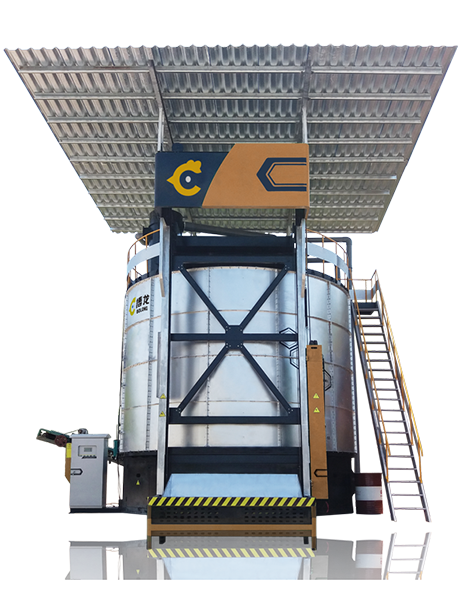
The energy logic of a fermentation tank is different from any dryer or burner, and it is worth understanding. The process is aerobic fermentation: microbes decompose the manure and generate heat as a by-product of their own activity. Inside a sealed, insulated vessel, that biological heat is retained instead of being lost to wind and rain, and temperatures climb to roughly 55°C within the first two days. Once fermentation is established, the microbes themselves carry much of the heating load, so the auxiliary heating system acts as support rather than the main energy input. Forced aeration supplies oxygen evenly through the material, and an internal mixing shaft keeps the batch uniform — replacing the repeated tractor passes an open pile requires. For farms in cold regions or wet seasons, where open piles stall completely, a heat recovery unit captures warmth from the exhaust air and pre-warms the incoming air, so the cycle holds steady. The result is an energy-efficient poultry waste treatment system that produces stable organic fertilizer in roughly 7 to 10 days, instead of the one to three months an open pile needs.
Compliance is only half of what a tank returns. The finished material is a dark, uniform, low-odor fertilizer that meets the harmless-treatment standard inspectors look for. Samples from Bolong's tanks have tested at 52% organic matter and 11.9% total nutrients (N+P₂O₅+K₂O), with fecal coliforms absent, ascaris eggs undetected, and heavy metals far below regulatory limits. Applied on the farm, it improves soil structure and feeds microbial life; sold locally, it turns a disposal cost into a revenue line. The payback math depends on local fuel and labor prices, but it starts with what stops being spent — fuel, labor, and nutrients lost to ammonia. That is what energy saving fermentation equipment returns, cycle after cycle: less waste, less energy, and a product with real value.
An organic fertilizer fermentation tank is selected, not manufactured from scratch, around a farm's figures. Daily manure volume and available footprint narrow down the model from a standard range — Bolong's spans 102 to 280 m³. Humidity, temperature range, and corrosion exposure decide the material and insulation choices, and handling priorities decide which auxiliary equipment is included, such as deodorization, heat recovery, or an automatic loader. Two chicken farms with the same bird count can end up with different configurations, because the specification is worked out from real numbers before anything is recommended.
Click here to contact us for a quick device matching!
1、How long does chicken manure fermentation equipment take to finish a batch?
A typical cycle runs 7 to 10 days. Temperatures climb to around 55°C within the first two days and hold there for the rest of the cycle, which is what eliminates pathogens and stabilizes the material.
2、Does the tank need external fuel to run?
Once fermentation is established, microbial heat inside the insulated vessel carries most of the load. The auxiliary heating system supports the cycle in cold weather, and a heat recovery unit reuses warmth from the exhaust air - so most of the energy in the process comes from the manure itself.
3、What sizes are available?
Bolong's standard range covers 102 to 280 m³. The right model is matched to your daily manure volume and site footprint; climate and corrosion exposure decide the material and insulation options.
4、Is the finished fertilizer safe to apply or sell?
Bolong-processed output has tested at 52% organic matter and 11.9% total nutrients, with fecal coliforms absent, ascaris eggs undetected, and heavy metals below regulatory limits — the kind of documented result an inspection, or a buyer, can verify.












 Consultation


