“Does your chicken manure composting machine produce biogas?”
This is a question we receive daily from customers. When livestock farmers see terms such as 'composting machine' or 'fermentation tank', they usually associate them immediately with biogas projects----those massive circular tanks that generate combustible gas through anaerobic fermentation.
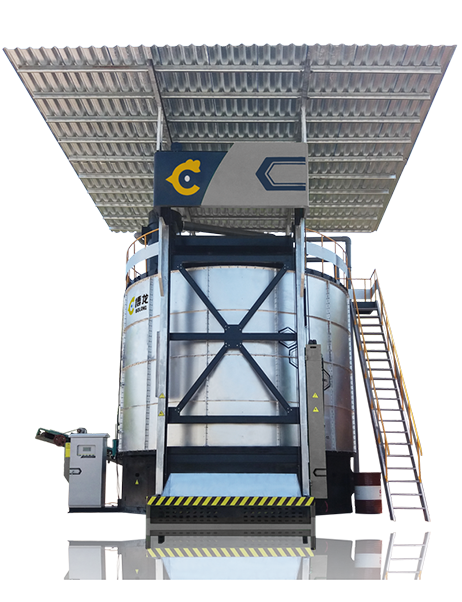
However, we would like to clarify today that Bolong chicken manure composting machines are entirely distinct from biogas digesters.
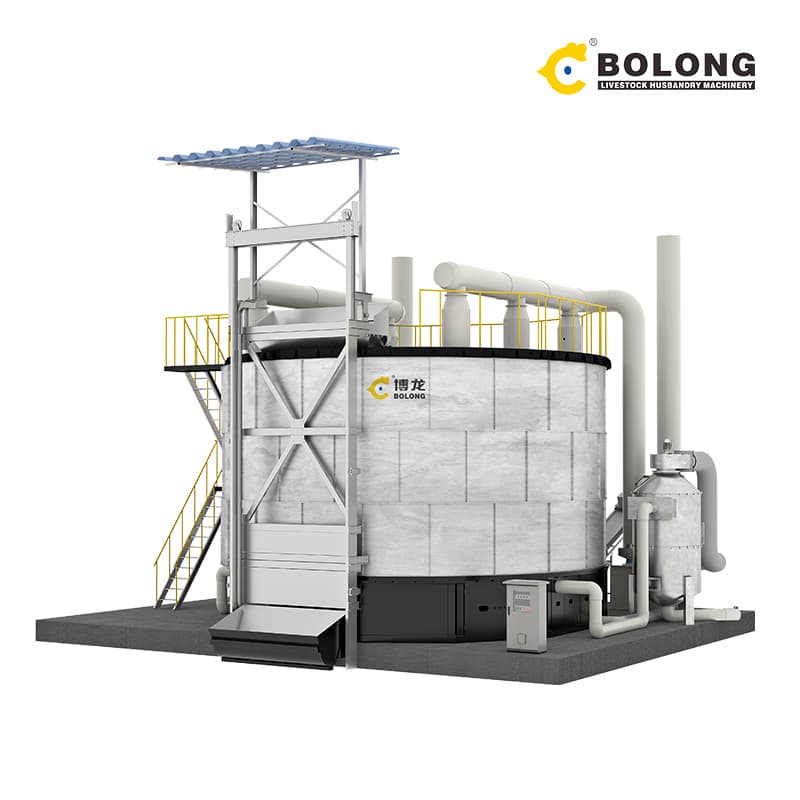
'Fermentation' is a broad biological concept referring to the breakdown of organic matter by microorganisms. However, the fermentation process and its products can vary drastically under different conditions.
Anaerobic fermentation: Occurs in an oxygen-free environment and primarily produces methane (biogas).
Aerobic fermentation: An oxygen-rich environment that primarily produces stabilised organic matter.
Bolong chicken manure composting machine falls into the latter category.
After decades of promoting biogas projects, the perception that 'biogas tanks = manure treatment' has become deeply ingrained. When farmers hear about chicken manure composting machines, they naturally associate them with this concept. However, biogas projects and chicken manure composting machines address entirely different issues. The former seeks to generate energy, while the latter produces fertiliser.
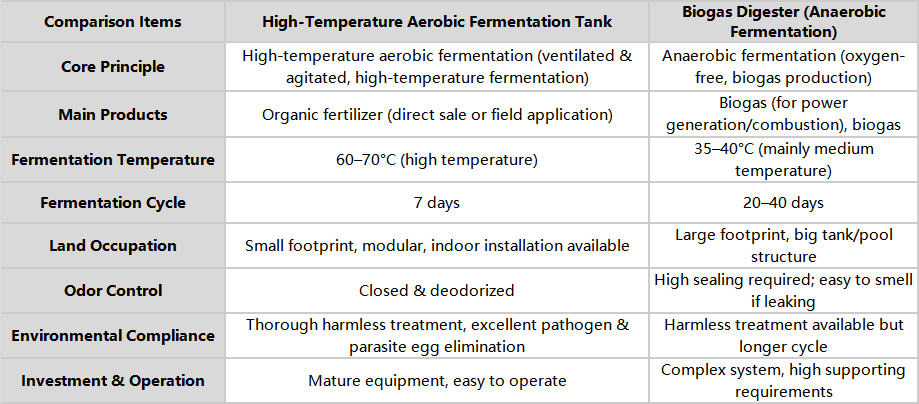
The machine provides ample oxygen to the microorganisms via forced ventilation. These aerobic microorganisms then multiply rapidly and decompose the organic matter, generating significant biothermal energy which naturally raises the tank temperature to between 60 and 75°C. After around 7 days of fermentation, the result is stable organic fertiliser that is rich in organic matter and beneficial microorganisms.
The entire process produces no methane, thus eliminating the flammable and explosive risks associated with biogas tanks.
The exhaust primarily consists of ammonia and trace sulfur-containing gases. These are processed through the triple deodorisation system integrated into the Bolong chicken manure composting machine.
First stage: Ammonia water scrubbing. Leveraging the high water solubility of ammonia, this stage converts ammonia into stable ammonium hydroxide. Second stage: Activated carbon adsorption. The activated carbon adsorption layer efficiently captures odour molecules from sulfur-containing malodorous gases such as hydrogen sulfide. Third stage: Microbial degradation. Functional microorganisms oxidise the sulfur-containing gases into non-irritating substances, ensuring that the treated gases meet emission standards.
The clear objective of Bolong chicken manure composting machines is to help farms overcome environmental challenges while delivering tangible economic value.
If you are interested in our machines, please feel free to contact us at any time. Our technical team will provide the most suitable solution for your farm based on its scale and processing requirements.












 Consultation


