Chicken farms produce manure in volume, and wet chicken manure is one of the richest organic materials a farm handles — and one of the most dangerous to apply raw. Treated properly, it becomes a high-value organic fertilizer. Untreated, it becomes a pathogen source, a pollution risk, and a wasted asset. The difference between those two outcomes is harmless treatment: a controlled fermentation process that eliminates pathogens, stabilizes the organic matter, and produces a material safe enough to sell. This article explains why wet chicken manure demands harmless treatment, what that treatment must achieve, and how a customized fermentation tank delivers it.
By nutrient density, chicken manure is one of the strongest animal manures available — commonly reported to contain several times the nitrogen, phosphorus, and potassium of cattle manure. That richness is exactly why it is valuable, and exactly why raw application is risky.
Fresh wet chicken manure carries fecal coliforms, salmonella, and parasite eggs. Spread untreated on soil, it introduces these pathogens directly into the cropping system, where they can persist and fuel disease cycles. The harm does not stop at microbes. Chicken manure that has not been fully decomposed keeps breaking down after application: it self-heats, releases harmful gases, and consumes soil oxygen, which can burn roots and create temporary hypoxia in the root zone. It is also acidic, so repeated raw application pushes soil toward acidification and the disease pressure that follows.
A second concern is specific to poultry. Because of high stocking density and the routine use of medications in feed, chicken manure can carry antibiotic residues and elevated heavy metals — substances that traditional open composting does little to address, and that regulators increasingly test for in organic fertilizer.
The nutrient value is real, but it cannot be unlocked without a treatment step that removes the biological and chemical hazards first.
Harmless treatment is not a single number; it is a set of verifiable outcomes. The first is pathogen elimination — fecal coliforms and parasite eggs such as Ascaris must be reduced below detectable levels in the finished product. The second is stabilization: the organic matter must be decomposed to the point that the material no longer self-heats or consumes oxygen after application. The third is safety: heavy metals — cadmium, lead, chromium, arsenic, mercury — must remain below the limits set by organic fertilizer standards.
The critical word is "verifiable." A farm must be able to show, not merely claim, that these outcomes were achieved. That is where method matters: a process that can be tested and repeated is worth far more than a pile that probably got hot enough.
Conventional wet chicken manure fermentation is done in open windrows or stockpiles. Under favorable conditions it takes one to three months to reach an acceptable state of decomposition. The process is slow, weather-dependent, and difficult to control: ambient temperature, rainfall, and turning frequency all change the outcome from batch to batch.
The side effects are well known. Open piles release odor continuously, breed flies in warm months, and produce leachate after rain that carries nutrients and pathogens toward watercourses. Adding starter microbial cultures can accelerate decomposition and reduce some odor, but it does not change the fundamental problem — the process is still open, still uncontrolled, and still unable to produce the consistent, testable output that harmless treatment requires.
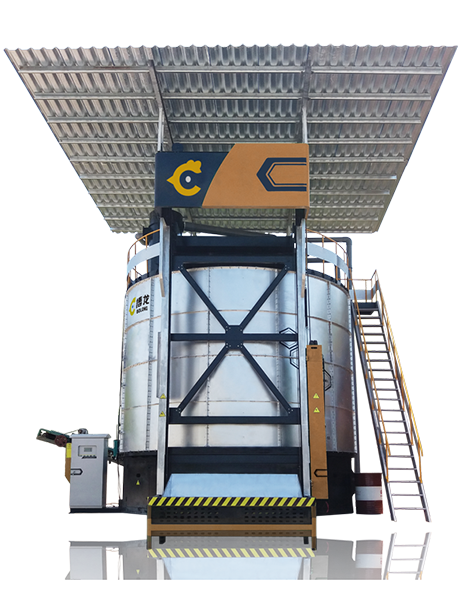
A customized fermentation tank removes the variables that make open composting unreliable. The manure is processed inside a sealed, insulated steel vessel where temperature, aeration, and mixing are controlled rather than left to the weather. High-temperature aerobic fermentation drives the process: thermophilic microorganisms decompose the manure while a forced-air system supplies the oxygen they require, holding the material above 55°C for a sustained period of each cycle. The result is an actively controlled biological process, not passive decomposition.

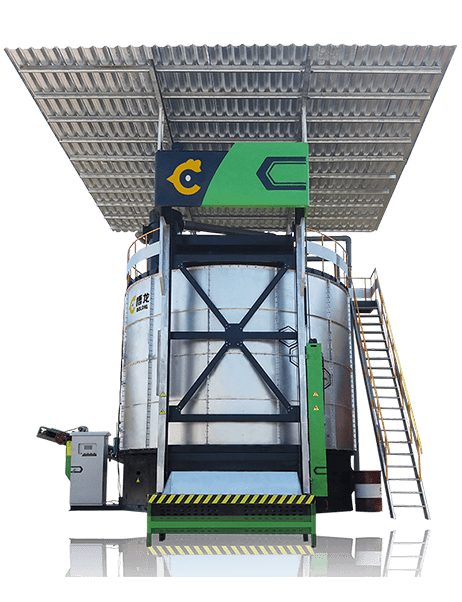
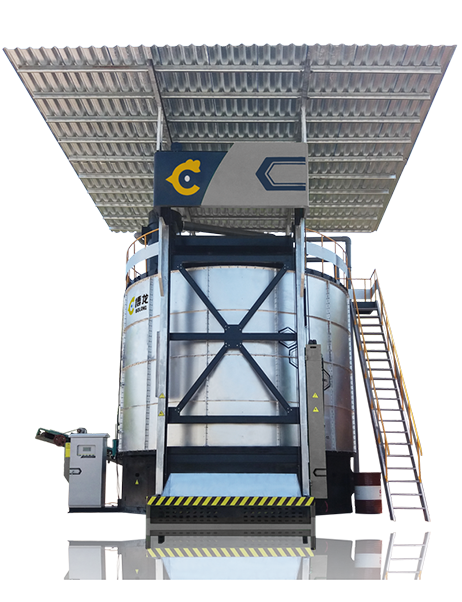
Bolong's fermentation equipment is built around this principle, and its structure reflects the demands of the process. The lower base houses the hydraulic station, air pump, hydraulic cylinders, heating system, and mixing shaft — the components that supply agitation, aeration, and temperature control. The middle section is a double-layer insulated tank: the inner wall is lined with 304 stainless steel to extend service life and reduce material residue, the interlayer is filled with polyurethane foam for thermal insulation, and the outer wall is a heavy steel shell that supports the vessel. The upper section provides a shelter, a detection platform, and exhaust facilities. Ancillary equipment includes an automatic tipping-bucket elevator for loading, an exhaust filtration and deodorization system, and a heat-exchange system that recovers waste heat from the process.
A practical advantage for poultry farms: a customized fermentation tank can process wet chicken manure directly, without requiring carbon-rich auxiliary materials, and the heating system allows stable operation across temperature zones — including colder climates where open composting effectively stalls.
Most importantly, the output is verifiable. Laboratory testing of finished product from Bolong's equipment has confirmed fecal coliform at non-detectable levels and Ascaris eggs absent, with heavy metals — cadmium, lead, chromium, arsenic, mercury — all measured below regulatory limits. In verified output, organic matter has reached 52% and total nutrients 11.9%, well above the thresholds set by China's organic fertilizer standard. These are the numbers that turn "probably safe" into "documented safe."
Getting the right customized fermentation tank starts with a few numbers from your operation. Daily manure volume sets the tank capacity — a farm processing 5 tons of fresh chicken manure per day needs a different model than one processing 20. Climate and site conditions shape the material specifications, from corrosion protection in humid coastal areas to insulation levels in colder regions. Available footprint, power supply, and what you plan to do with the finished fertilizer all factor in as well.
This is why Bolong works from your actual figures rather than a standard quote. Two farms with the same bird count can differ in manure moisture, layout, and end goals, and the equipment should fit those specifics from day one. Share your daily manure volume, site conditions, and fertilizer plans, and the team will recommend the model and configuration that matches — along with expected cycle time, output quality, and what the finished product can be used for on your farm or sold for locally.

Because chicken manure, farm scale, and climate vary from farm to farm, the first step is not selecting a model — it is defining the input. Tell us your daily manure volume, your current handling method, and your local climate, along with any environmental requirements that apply to your operation. We will recommend a customized fermentation tank model that fits those figures, explain what the transition from open composting or raw stockpiling would involve, and give you a clear picture of cycle time, output volume, and the quality of fertilizer you can expect — before anything is installed.
Get a tank recommendation for your farm.












 Consultation


