If you ask any farmer how long it takes to ferment chicken manure into safe fertiliser, they will probably shrug and say they don't know. The traditional method of leaving a pile in the corner of the yard takes four to six months to fully decompose — if the weather is favourable. Meanwhile, the flock produces manure every single day. Manure leaving the farm tomorrow cannot wait six months for the pile to catch up, nor can the field requiring base fertiliser next month. A livestock manure fermentation system is designed to bridge this gap by compressing the same biological process that nature runs across a season into a controlled vessel that finishes each batch in about seven days.
If left alone, manure will ferment. However, natural decomposition is a passive process that occurs at whatever speed the temperature, moisture and oxygen levels allow. In a loose pile, for example, oxygen only reaches the outer layer, so the core quickly becomes anaerobic and slows down considerably. Cold weather further stretches the timeline — a pile started in late autumn may remain almost dormant until spring. The four-to-six-month timeframe is not a rule that was designed; it simply reflects how long it takes when the process is not managed.
During those months, however, the pile is not idle. It loses nitrogen to the air in the form of ammonia, attracts flies throughout the warm season and occupies ground that could be put to other uses. Long fermentation is not safer — it is slow and uncontrolled, with losses throughout. A farmer who waits six months for 'complete' decomposition is also losing a proportion of the fertiliser value as it drifts off the pile and disappears.
Many farmers cut corners by not waiting. A pile that has been left for a month or two appears darker and smells less sharp than fresh manure, and seems ready to be spread. This seems like a reasonable judgement, but it is precisely at this point that chicken manure starts to cause damage in the field.
Partially fermented manure has not finished its biological work. Once spread and worked into the soil, the remaining decomposition continues underground and releases ammonia directly around the roots of young crops. Seedlings respond with burned root tips and stunted early growth. In severe cases, there are patchy stands that have to be resown. The fermentation that did not finish in your pile in the yard is finished by the soil — and the crop pays for it. Fresh manure carries the same risk, but in a more severe form. However, the half-fermented batch is more common because it resembles compost yet behaves like raw manure.
There is also a time delay built into the traditional method. If the pile needs months of decomposition before sowing, fermentation must start before the previous season has ended. If you miss this window, the manure will either be spread while still unfinished or held back for another season. Either way, the field misses out on the base fertiliser it was supposed to receive.
Because "looks ready" is unreliable, experienced composters judge finished manure by a short list of signs. Fully fermented manure no longer heats up when the pile is turned or restacked — the microbial activity that once drove temperatures high has run its course. The material is dark, crumbly, and smells like soil rather than like manure; a sharp ammonia edge means the process is still active. And the volume has dropped noticeably from the original pile, because water and carbon have been driven off along the way.
The problem with these signs is that they arrive on the pile's schedule, not the farm's. A farmer can inspect a windrow every week and still not know whether the manure will be ready before the sowing date, because the answer depends on weather no one controls. The real question is never just whether manure is done — it is whether it will be done on the day the field needs it.
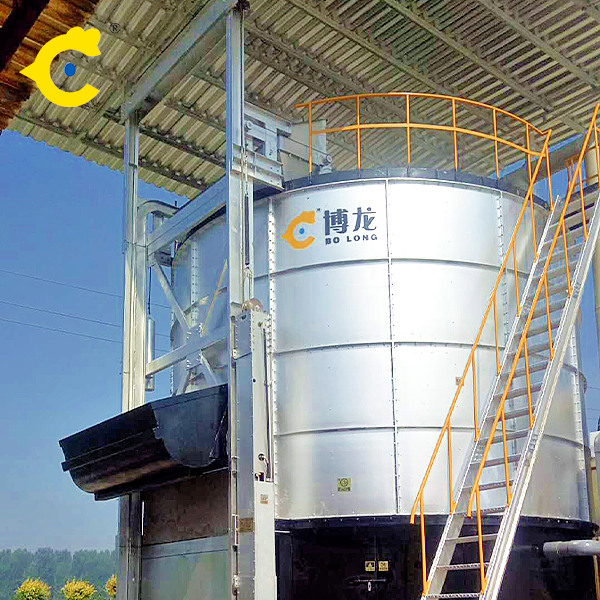
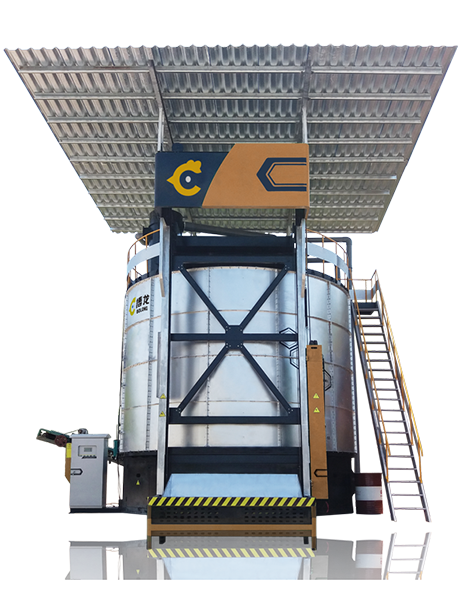
A livestock manure fermentation system replaces the pile's passive timeline with an actively managed one. Manure is loaded into a sealed, insulated vessel where forced aeration keeps oxygen moving through the material and the microbial population runs at full speed. Core temperatures around 55°C are sustained through the cycle — high enough to break down pathogens and weed seeds, controlled enough to preserve nutrients — and the batch comes out after seven to ten days as a dark, crumbly, stable product that carries no ammonia edge and can go straight to the field as base fertilizer.
The same system handles more than chicken manure. Pig manure, cattle manure, and other livestock waste run through the same enclosed aerobic process, which is why a livestock manure fermentation system fits mixed operations as well as single-species poultry farms. Because the vessel is sealed, the ammonia that an open pile would release over months is generated inside the tank and passed through an exhaust treatment module instead of the yard air. Winter does not pause the cycle either: the process runs on its own biological heat, so a farm in a cold climate can keep producing finished fertilizer in January at the same pace as in June.
In effect, the tank turns fermentation from a season-long gamble into a weekly production step. Every batch reaches the same endpoint — stable, dry, ready to spread — because the conditions that finish it are built into the equipment rather than left to the weather. Whether the fertilizer is headed for your own fields or a buyer's order, a one-week cycle means it is ready when the calendar calls for it, not when the pile happens to finish.
The pile behind your barn does not have to be next season's problem. Send us your livestock type and daily manure output, and our application engineers will reply with the tank model for your volume and the loading rhythm that fits your cleanout. From the first batch on, fertilizer production runs on a schedule you control — not on the weather's. Waiting on a pile is a choice; a seven-day cycle is the alternative.
1、How long does it take to compost chicken manure naturally?
In an open pile under unmanaged conditions, full decomposition generally takes four to six months, and longer through a cold winter. This is the timeline of passive fermentation, where oxygen, temperature, and moisture are controlled by nobody. A livestock manure fermentation system runs the same biology under managed conditions and finishes a batch in seven to ten days.
2、Can I use chicken manure as base fertilizer after one or two months of piling?
It looks ready before it is. A month-old pile has usually only partially fermented, and the remaining biological activity resumes once the manure is in the soil. Ammonia released around young roots causes burning and stunted growth — the classic damage blamed on "manure" is usually damage from manure that was never finished.
3、How can I tell if manure is fully fermented?
Finished manure no longer reheats when turned, has a dark crumbly texture, smells of soil rather than ammonia, and has lost a noticeable share of its original volume. Any sharp ammonia smell means the process is still active and the material should not yet go around roots. In a controlled fermentation system, the endpoint is reached on a set schedule instead of being judged pile by pile.
4、Does the system work for pig and cattle manure, or only chicken manure?
The enclosed aerobic process is the same across livestock species. Pig and cattle manure differ from chicken manure in moisture and nitrogen content, and the vessel's aeration and cycle settings are adjusted to match, but the outcome is the same: a stable, pathogen-reduced organic fertilizer finished in days rather than months.












 Consultation


