When a farm enquiries about a customized fermentation tank, there is usually a hidden concern that 'customised' means months of engineering drawings, a vessel that has to be welded from scratch, and a price that cannot be approved until the welding is complete. However, in manure treatment, almost none of the customisation that farms actually need works that way. The tank designs are standardised, but the fit is not. What is tailored is the configuration: which standard-range volume handles your manure flow, which materials and insulation suit your climate, and which optional modules your operation will genuinely use. Understanding this distinction is the difference between paying for unnecessary engineering and installing a system that fits your farm as if it were built for it.
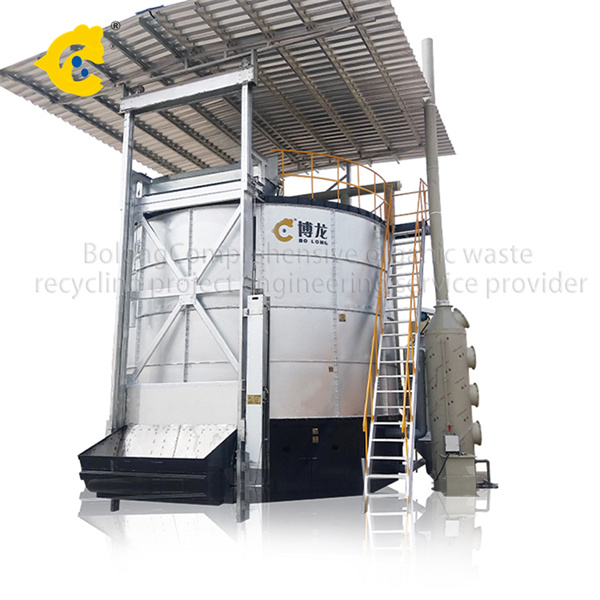
Break down almost any enquiry that uses the word 'customised' and it boils down to three decisions.
The first is capacity. A proven tank series covers a wide range of working volumes, so the engineering work lies in matching your daily manure load to the right point in that range, rather than designing a new vessel around it. A standardised structure has been load-tested and refined through years of operational use, and comes with readily available spare parts. This is not a limitation, but rather the reason why the equipment can be delivered quickly and priced before manufacturing begins.
The second decision is the material and insulation. Manure is corrosive and climates can be hard on equipment. Material selection and the insulation package determine how well a tank is suited to its environment.
The third category comprises optional equipment such as exhaust treatment, heat recovery and automated feeding systems, which a farm only adds when necessary.
In this sense, a customized fermentation tank is not an engineering project. It is a standard vessel with the correct configuration, which is precisely how the in-vessel composting industry matured. Properly made custom manure fermentation equipment means a precisely fitted configuration, not a bespoke weld.
Every configuration starts with the manure itself, because moisture content shapes the system more than any other single fact about a farm.
Chicken manure from layer or broiler houses usually arrives relatively dry, often blended with litter, and moves through thermophilic fermentation quickly and predictably. Pig manure carries more water; the usual answer is blending with a dry carbon source — straw, rice husk, sawdust — so the mixture reaches the moisture range where aerobic microbes work best, and the tank's internal mixing keeps that blend uniform through the cycle.
Waterfowl manure is its own case, and the one most farms worry about. Duck and goose droppings leave the house carrying water from drinking and wet areas, and the collected stream runs wetter than anything a broiler house produces. The solution is not different engineering. It is a tuned recipe: a drier auxiliary material strategy, an adjusted batching ratio, and a cycle managed for the higher starting moisture. A fermentation tank for duck manure is the same proven vessel with the mix engineered for wet feedstock. That pattern repeats across species — the animal changes the recipe, not the tank.
The next set of decisions comes from where the tank will live.
A sealed, insulated fermentation vesselis its own controlled environment. It installs outdoors or under a simple shed, because the tank — not the building around it — holds the fermentation conditions. That fact drives two configuration choices.
In cold regions, insulation does the base work and the optional heat recovery system adds to it: warmth from exhaust air is captured and fed back toward incoming air, keeping winter fermentation stable without external heating. In humid, coastal, or salt-exposed locations, the material specification does the work instead, resisting the corrosion that shortens equipment life. Site layout sets the third choice — how manure reaches the tank. Depending on the yard, feeding runs through a bucket elevator, a conveyor line, or a simpler hopper arrangement, and how finished fertilizer leaves the vessel follows the same logic. None of these change the tank. All of them change how well it serves the farm.
The last configuration question is what the finished fertilizer is for.
Farms spreading it on their own fields need stability and pathogen reduction, and the enclosed aerobic process delivers both: high-temperature treatment through the batch, with finished material ready in roughly a week to ten days of residence time. Farms selling fertilizer face a bar instead of a preference — buyers and regulations care about organic matter, nutrient content, and hygiene indicators. And farms near villages, schools, or boundaries care most about what leaves the exhaust pipe, which is where the optional exhaust treatment module earns its place by substantially reducing odor emissions rather than leaving them to drift.
Each goal maps to a module, and — just as important — the absence of a goal maps to the absence of a module. A well-configured system carries nothing the farm will never use.
Before any supplier quotes, reverse the interview. Three questions should come back at you before a price does.
What manure, and how wet? Species, moisture, bedding — this decides the recipe.
Where will the tank sit, and what does the weather do there? Climate and layout decide materials, insulation, and feeding.
What is the finished fertilizer for? Spreading, selling, or meeting a standard decides the modules.
A quote that arrives without those questions priced a tank, not your operation. What came back was warehouse inventory. A supplier who asks them should return three things: the model from the standard series that matches your flow, the material and insulation choice with the reason behind it, and a module list where every line states what it changes. Insist on exactly that — and if your answers are the unusual ones, wet manure from ducks and geese, a cold site, a fertilizer grade to reach, that is precisely what configuration exists to solve.
Describe your farm in your own words and send it over. The reply will be those three decisions, made specific to your operation.
1、Do Bolong customized fermentation tanks require custom dimensions?
No. The standard series covers working volumes from 102 to 280 cubic meters, and daily manure volume is matched to a model within that range. Customization applies to materials, insulation, and optional modules — not to redesigning the vessel.
2、Can the tank process high-moisture duck and goose manure?
Yes. Waterfowl manure is handled with a drier auxiliary material strategy and an adjusted batching ratio for the higher starting moisture, using the same vessel and fermentation cycle as other livestock manure.
3、What finished fertilizer quality does it produce?
Third-party tested output from working tanks: organic matter 52%, total nutrients (N + P₂O₅ + K₂O) 11.9%, moisture 22%, negative for fecal coliform, no ascaris eggs detected — with heavy metals well below standard limits.
4、Can the system operate through winter?
Yes. The vessel is sealed and insulated, and the optional heat recovery system returns exhaust warmth to incoming air, keeping fermentation stable in cold seasons whether the tank stands outdoors or under a shed.












 Consultation


