A layer farm can keep the chicken houses ventilated and still receive a complaint about the smell outside. The source may be the manure waiting beside the houses after collection. Each load joins the last, and a holding area intended for a few hours gradually becomes a pile that remains for days.
A chicken manure compost machine addresses that part of the problem: what happens after manure leaves the house. Bolong’s enclosed aerobic tank is designed to receive prepared material regularly, with an initial fermentation period of approximately 7–10 days. Once operation is established, staff can add material and discharge processed material daily. That working rhythm gives a farm a way to shorten the time fresh manure spends waiting in an open holding area.
Ammonia inside a chicken house and odor around a manure pile are related, but they occur at different points in the farm’s workflow. House ventilation, litter management and the frequency of manure removal influence conditions around the birds. Once manure is removed, its collection point, transfer route and storage time become a separate management task.
It would be misleading to say that aerobic fermentation produces no ammonia. Chicken manure contains nitrogen, and ammonia can still be released as the material breaks down. The advantage of an enclosed process is that fermentation takes place in a contained vessel, where outgoing air can be directed to an exhaust treatment system. The gas has a defined route rather than escaping freely from a pile spread across the yard.
That distinction is useful when reviewing complaints. If the strongest odor is near stored manure, improving ventilation inside the house alone will not remove that source. The farm needs to trace where manure waits, how long it waits and where air from the treatment process goes.
Freshly collected manure already has an odor. Leaving it in a pile can introduce further problems, especially when new wet material is repeatedly added. Moisture may concentrate in some areas; compacted sections receive less air; and staff may have to disturb the pile when loading the next batch. Each of those conditions can change what people smell around the holding area.
A pile that has stood for three days is not automatically smellier than every fresh load. Its condition depends on moisture, temperature, pile depth and handling. The practical point for a farm manager is that waiting makes these conditions harder to keep consistent. Rain, cleaning water or an unusually wet delivery can make an open pile particularly difficult to manage.
This is why the receiving area matters as much as the tank. A chicken manure compost machine works within a daily collection plan: manure is gathered, its condition is checked, and suitable material is fed into the equipment without building a long-term pile beside it. The farm still needs enough short-term receiving space for its normal schedule and a plan for interruptions.
Bolong’s process explanation for a closed fermentation vessel states that material below 70% moisture can be fed directly. Before installation, the team should confirm the target range for its particular manure and quoted configuration. Material above the suitable range needs preparation; leaving it outdoors to dry for days should not be the default operating plan.
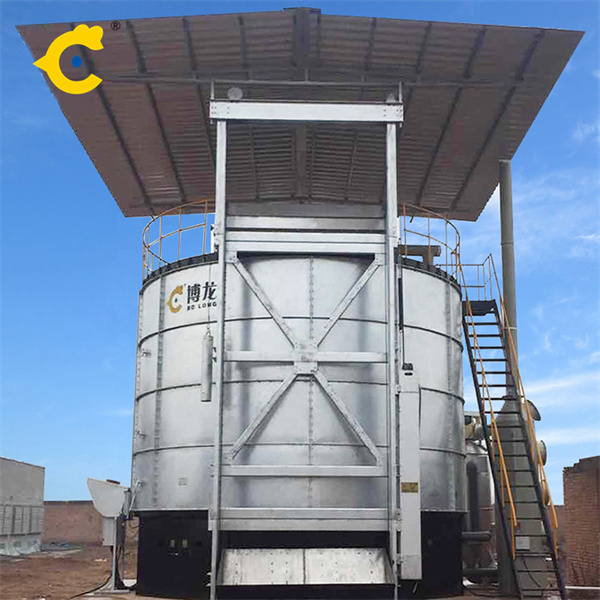
Bolong’s equipment is a vertical, enclosed aerobic tank. Air supply and mixing support microbial activity, while temperature monitoring helps operators follow the fermentation process. The tank itself provides a controlled environment and can be installed outdoors or beneath a shelter; the process does not depend on turning an exposed pile across a large yard.
A chicken manure compost machine gives the farm control over a stage that is difficult to manage in an open pile. Manure ferments inside Bolong’s enclosed tank, while mixing and aeration keep the process moving. Instead of letting fermentation air escape across the yard, the tank directs it through the configured deodorization system. Bolong’s heat exchange device can also recover heat from the exhaust for reuse in the process.
For the farm team, the difference is practical. Fresh manure can move from collection to the tank without spending days in an open pile. Staff can manage feeding, monitor the process and plan where the discharged material will go. The tank does not replace good manure handling around the chicken houses, but it gives the farm a defined place and process for treating what has been collected.
The output is a solid material for organic fertilizer use, rather than another pile of untreated manure. In one test of Bolong’s discharged material, moisture measured 22%. If the farm plans to bag, apply or sell the fertilizer, it can use discharge testing to check the product against its intended use and local requirements.
The first startup requires patience: staff should not expect finished discharge on the day the tank is first filled. After that initial period, the farm can move into a continuing routine of feeding and discharge. Daily discharge does not mean that manure added today finishes fermenting tomorrow. Each new load spends time in the process while earlier material is removed.
For a layer farm, this changes the work at the manure collection point. Instead of deciding how to extend a growing pile, staff have a planned route for that day’s prepared material. The manager can review feeding, temperature and discharge records to see whether the treatment area is keeping pace with collection.
A chicken manure compost machine should therefore be assessed alongside the farm’s cleaning schedule. Where does manure arrive? Is it ready to feed, or does it need moisture adjustment? Can staff move discharged material away without blocking the next delivery? A layout that answers these questions is more valuable than a tank placed wherever there happens to be spare ground.
If your farm is still comparing an enclosed system with an existing compost yard, contact Bolong for an assessment of your current manure handling process. We can help you review where manure accumulates, how long it waits before treatment, and how the equipment would fit into your daily routine. You can also request equipment details and operating information to support your decision.
Once manure leaves the chicken house, the priority is to move it into treatment without letting it sit in the yard. Bolong’s chicken manure compost machine gives the farm a clear route: collect the manure, check its condition, feed it into the enclosed tank and direct fermentation exhaust through the configured deodorization system.
This makes the collection area easier to manage. Staff have a regular feeding schedule instead of repeatedly moving a growing pile, and the farm can plan for processed material to be discharged each day after the initial startup period.
Bolong can review the farm’s collection route, incoming moisture and existing stockpile when planning the installation. That way, the equipment and the daily workflow are considered together, with the aim of reducing the time manure waits in the open.
1、Can odor escape from the tank?
An enclosed tank contains the fermentation space, and outgoing air can be routed through a specified exhaust treatment system. Feed points and material handling areas still require proper operation. Ask to see the proposed exhaust and loading layout for your site.
2、Will a chicken manure compost machine reduce ammonia inside the chicken house?
It treats manure after removal from the house. Ventilation and manure removal practices remain the direct controls for conditions inside. Faster transfer to the treatment area can reduce the time removed manure waits elsewhere on the farm.
3、What should we do with an existing manure pile?
Check its moisture and condition before deciding how to feed it. A pile containing old, wet or unevenly decomposed material may need preparation and a separate loading plan. The routine for fresh daily manure should be planned at the same time.
Contact Bolong to review that arrangement for your site.












 Consultation


