Small and mid-size poultry farms often try to compost chicken manure the traditional way — piling it up in a corner of the yard and waiting. The result is usually disappointing: the pile either never heats up properly, stays wet and foul-smelling for months, or scorches nearby plants when spread too early. The problem is rarely the manure itself. It's that fermentation depends on three factors working together, and open-pile composting gives you control over none of them.
Moisture content is the most common failure point. Fresh chicken manure typically holds 60-75% moisture, well above the 50-60% range where aerobic microbes work most efficiently. Even though industrial systems can tolerate up to 70% moisture directly, getting closer to that 50-60% window still produces faster, more complete fermentation. Too wet, and the pile turns anaerobic — slow, smelly, and prone to producing ammonia that can damage crops if applied too soon.
Aeration matters just as much. Manure needs oxygen flowing through it for aerobic bacteria to break it down quickly and at high temperature. In an open pile, only the outer layer gets enough air; the core often stays compacted and oxygen-starved, which is why piles can sit for a year or more without fully breaking down.
Temperature is the signal that tells you fermentation is actually working. A properly fermenting pile should reach 55°C or higher within days — hot enough to kill pathogens, parasites, and weed seeds. If a pile never gets hot, it isn't fermenting; it's just sitting there decomposing slowly and incompletely.
Farmers who compost manually often try to fix moisture by mixing in straw, sawdust, or dry bedding material at a roughly 30% ratio, then turning the pile periodically to reintroduce oxygen. This can work on a small scale, but it demands constant manual labor, is highly weather-dependent, and still takes 60 days or more to produce usable fertilizer. For farms producing manure daily, the backlog never clears — new waste arrives faster than the old batch finishes.
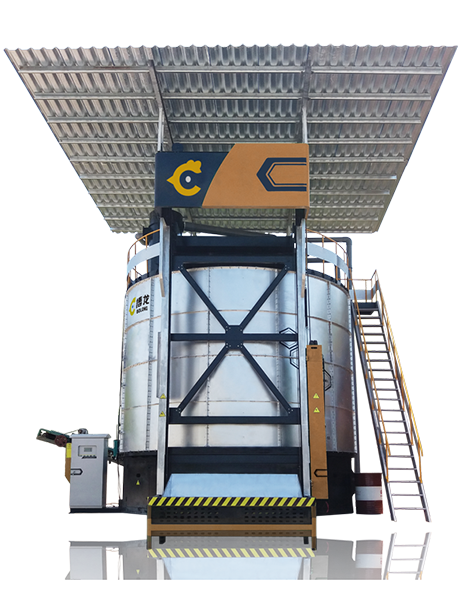
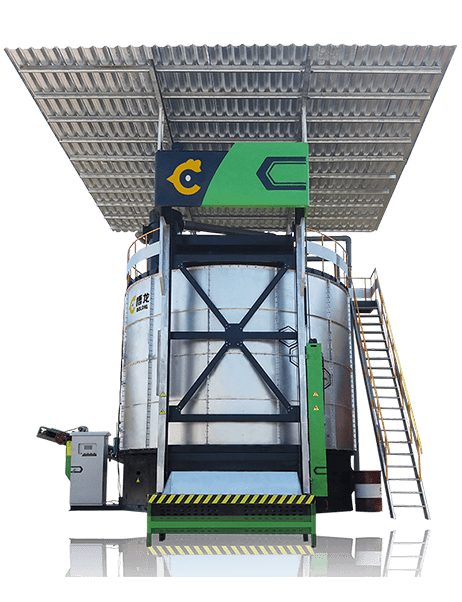
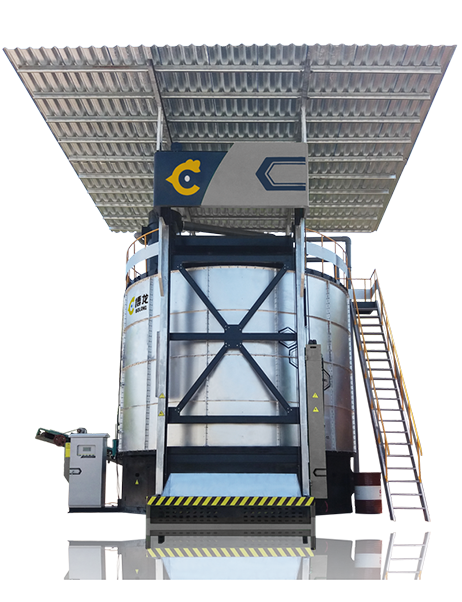
An enclosed fermentation tank controls all three factors automatically instead of leaving them to chance. A mechanical stirring shaft keeps the material aerated throughout the cycle, forced-air blowers maintain oxygen levels, and the insulated tank holds the internal temperature at 55°C or above for the full cycle — no manual turning, no waiting on dry weather. The result: raw chicken manure with up to 70% moisture content converts into stable, pathogen-free organic fertilizer in just 7-10 days, with a sealed exhaust system controlling odor throughout the process.
Cold weather is another factor open piles can't control — fermentation slows dramatically or stalls completely in winter, since a pile relies on ambient conditions to help retain the heat microbes generate. Because the tank is a sealed, insulated vessel with active temperature control, it maintains the same 55°C+ internal environment through winter operation as it does in summer. Farms don't lose weeks of processing capacity to seasonal temperature swings, and manure keeps moving through the 7-10 day cycle year-round.
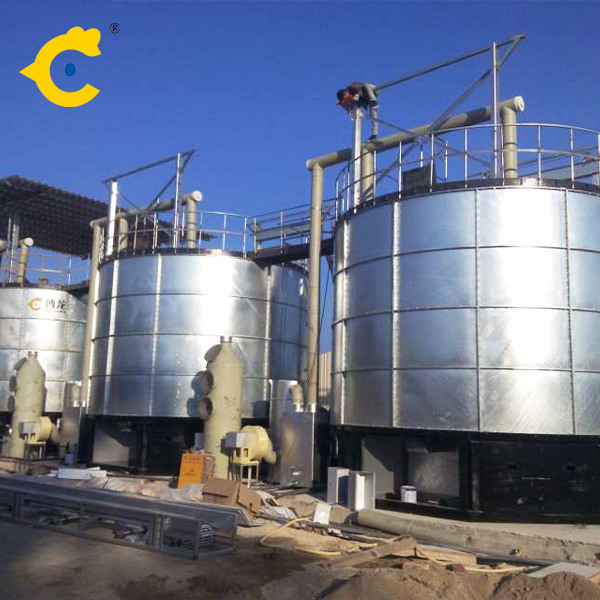
Energy saving fermentation equipment matters just as much as speed when you're running a system day after day — electricity and fuel costs add up fast for operations processing manure continuously. Bolong energy saving fermentation equipment addresses this directly through heat exchange technology: the exhaust air generated during fermentation still carries usable heat, and instead of venting it away, the system recovers that heat and feeds it back into the process. This cuts the energy needed to maintain the 55°C+ fermentation temperature by roughly 30-40% compared to equipment without heat recovery — a meaningful saving when the tank runs continuously, including through the colder months when maintaining temperature would otherwise demand more energy.
Switching from open-pile to tank fermentation doesn't require any extra preparation on your end — the tank accepts chicken manure with moisture content up to 70% directly, with no straw or sawdust needed beforehand. You'll know a batch is done when the output turns dark, crumbly, and odor-free, having reached 55°C or higher during the cycle to eliminate pathogens and weed seeds — something tank-based systems achieve consistently every batch, unlike open piles. The whole process takes roughly 7-10 days, versus 60 or more for traditional windrow composting, which matters most if your farm generates manure daily and can't afford a growing backlog.
Contact Bolong to find the right energy saving fermentation equipment configuration for your farm's daily manure output.












 Consultation


