Manure management is often not the most visible aspect of the day-to-day operations of livestock farms, yet it is the one most likely to “throw a spanner in the works”.
If manure produced each day is not processed promptly, it will gradually accumulate, taking up space and impacting the environment. It can even disrupt the entire production schedule. This pressure is especially significant in large-scale farming operations, where it occurs on a daily basis.
For this reason, an increasing number of farms are re-evaluating their treatment methods, integrating manure management into their daily operations with more stable, continuous equipment.
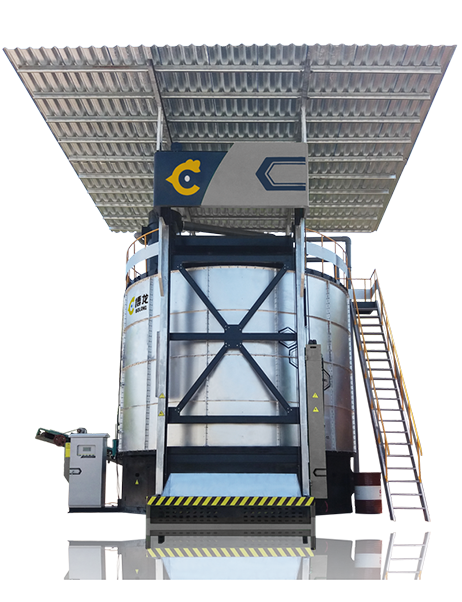
Against this backdrop, chicken manure compost tanks are emerging as a new solution.
In practice, the two most common ways of treating livestock manure are turning windrows and using enclosed chicken manure composting tanks. However, as farms grow in size and management needs increase, the differences between these two methods have become clearer in practice.
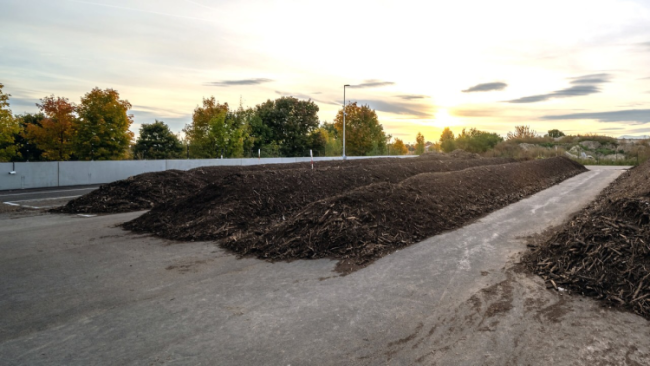
This older method uses the periodic turning of the material to achieve aerobic fermentation.
In practice, its characteristics are mostly evident in the following:
It needs a lot of room to stack, which takes up a lot of space.
The fermentation process is greatly affected by temperature and weather, making it less stable.
It needs to be turned often, which means a lot of manual work and management.
Controlling odours is difficult, especially in hot weather.
Therefore, while this method remains viable for small-scale operations or situations with ample land, it often faces limitations in large-scale, continuous production.
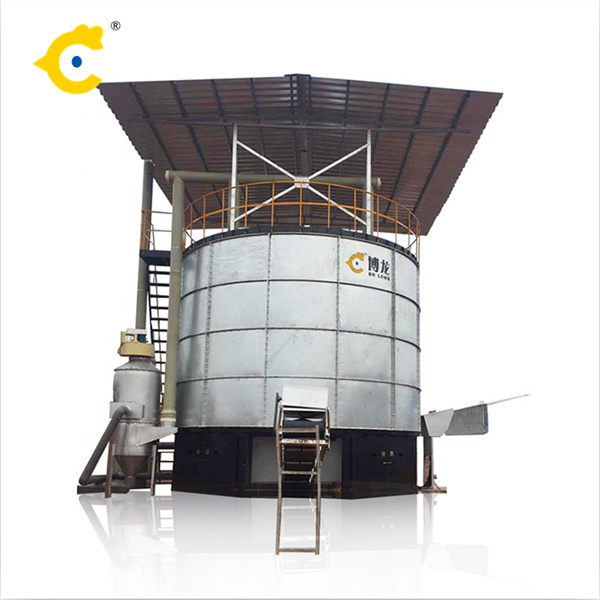
This mechanised system combines feeding, fermentation and discharge into one unit. This makes it more efficient and stable for livestock farms, which is exactly what they need.
Its benefits are mostly found in a few important areas:
A more stable processing cycle: Fermentation usually takes seven to ten days and is not greatly affected by the weather.
More continuous work: This allows for continuous feeding, which fits with the 'daily production, daily clearance' rhythm of large-scale farming.
Smaller footprint: The vertical structural design saves a lot of floor space.
Easier odour control: The combination of an enclosed operation and deodorisation systems makes external odours less noticeable.
In practice, chicken manure compost tanks are ideal for farms looking to reduce management risks, maintain stable processing volumes and uphold high environmental standards.
The operational process of chicken manure compost tanks is fairly standard:
Adjust the moisture level according to the type of material and mix it slightly to optimise fermentation.
Once the material is in the equipment, the system automatically mixes, aerates and controls the temperature. This maintains a stable aerobic environment.
Once fermentation is complete, the material can be screened as required or used immediately to recover resources.
The needs of customers are also changing in the current market.
Previously, the focus was mostly on the equipment itself, but now it is on:
How to set up processing capacity for different sizes in a reasonable way;
Whether deodorisation and downstream treatment systems should be combined;
Long-term dependability and stability in operations.
This means that chicken manure compost tanks are now an important part of the manure treatment system, rather than just separate pieces of equipment.
As large-scale farming becomes more efficient, the treatment of manure is evolving from a "supporting function" to a "core management module". The value of chicken manure compost tanks has evolved from merely being a processing unit to becoming essential infrastructure for the smooth running of livestock farms.
If you are looking to improve your manure treatment methods or want to know more about setting up chicken manure compost tanks of different sizes, contact us today to learn more about our products. Using the right equipment makes processing more efficient and sets your farm up for long-term, stable operation.












 Consultation


