Monsoons often bring months of continuous rainfall, which can cause problems for traditional open-air composting. Rainwater runoff can contaminate nearby rivers and farmland by leaching manure into the soil.
Chicken and pig manure decompose very quickly in tropical environments with high temperatures and humidity. If not treated promptly, this produces a strong odour and fosters the breeding of mosquitoes, flies and pathogens while increasing the risk of wastewater contamination.
In Southeast Asia, where rainy seasons are frequent and the climate is humid, problems with this traditional method are becoming increasingly apparent. Using enclosed treatment equipment, such as animal manure composting tanks, is no longer optional, but necessary for managing the rainy season and ensuring compliance.
Chicken and pig manure naturally contains high levels of organic matter, moisture and nitrogen, which ferment rapidly in high-temperature environments. If there is insufficient oxygen, the material easily enters an anaerobic state and continuously produces foul-smelling gases such as hydrogen sulfide (H₂S) and ammonia (NH₃).
Compared to temperate regions, countries such as Myanmar and Indonesia experience prolonged periods of high temperatures and humidity. While this climate is conducive to the growth of livestock, it also accelerates the decomposition of organic matter. Under these conditions:
Open-air storage: Operations are halted during the rainy season and manure is washed into the surrounding areas by rain, which can lead to environmental penalties.
Simple shed-style composting: Even with a roof, high temperatures accelerate the decomposition process, generating large amounts of unpleasant gases.
Risk of disease transmission: High densities of mosquitoes and flies may increase the likelihood of disease transmission via manure.
Many farms initially start with 'small-scale piling', but as production volumes increase, traditional manure management methods often quickly become unmanageable.
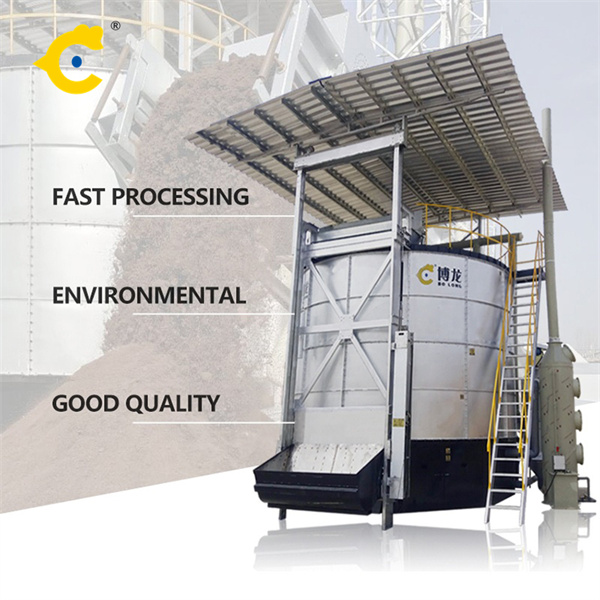
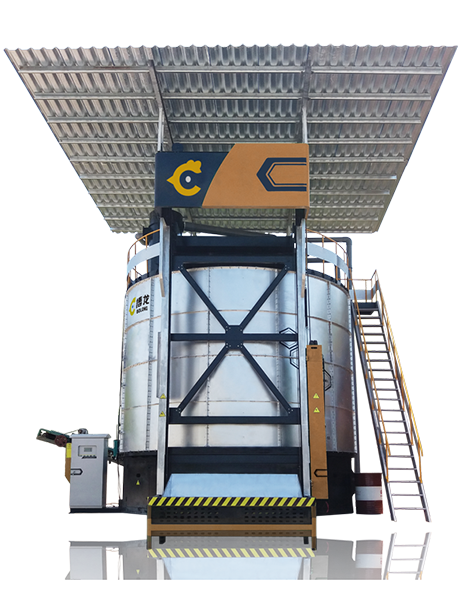
Designed for Southeast Asian farming environments, Bolong’s animal manure composting tank emphasises “sealed operation, automation and continuous processing”.
Compared to traditional open-air composting, its vertical, sealed structure effectively prevents rainwater from entering the system and reduces odour dispersion.
The entire system uses a PLC-based automatic control system to enable automatic aeration, mixing and temperature control for continuous operation. It maintains a stable aerobic environment, even in high humidity conditions.
For many livestock farms, the greatest challenge is not whether fermentation will occur, but whether the process can operate continuously and stably. This is particularly true in Southeast Asia, where frequent rainfall and high humidity can easily cause traditional composting systems to spiral out of control.
The animal manure composting tank uses aerobic fermentation technology to rapidly process waste through the following mechanisms:
Temperature control: It maintains an optimal high-temperature environment (typically within the 55–75°C range) to promote beneficial microbial activity.
Oxygen supply: Automatic aeration or agitation systems ensure uniform oxygen distribution.
Odour control system: Multi-stage treatment (spraying, adsorption, biodegradation, etc.) reduces odour emissions.
This process converts fresh manure into stable, odourless and harmless organic fertiliser in a short period of time, while effectively eliminating pathogens and insect eggs.
In regions with high temperatures, the prolonged accumulation of manure is particularly problematic. If left for too long, it can decompose rapidly, leading to odour and pathogen issues.
The Bolong Animal Manure Composting Tank supports continuous feeding and operation, enabling a 'daily production and daily clearance' model. Manure generated daily on the farm can be quickly fed into the fermentation system for processing, thereby reducing the time it spends in open-air piles.
This is particularly important for poultry farms.
Chicken manure has a high nitrogen content and, if not treated promptly, produces a more pronounced odour than ordinary livestock manure. Consequently, an increasing number of farms are adopting chicken manure composting tanks to shorten the treatment cycle.
For integrated farms, these tanks can uniformly process manure from various animals, improving the efficiency with which resources are utilised.
Compared to traditional composting, which takes weeks or longer, mechanised high-temperature fermentation enables manure to reach a stable decomposition stage much more quickly.
In the hot and humid climate of Southeast Asia, manure treatment is no longer as simple as “piling and fermenting”; it is now a long-term battle to ensure environmental compliance and operational efficiency.
Opting for an animal manure composting tank signifies a transition from reactively addressing pollution complaints to proactively establishing a sustainable cycle.
For large-scale farms in regions such as Myanmar and Indonesia, this is a necessary measure not only to cope with the rainy season and environmental regulations, but also to improve farming efficiency and achieve green development.
Take action now and transform manure management into a competitive advantage.












 Consultation


