Livestock manure used to be a major problem for farms, causing transportation costs, odour complaints and environmental fines. However, the situation is undergoing a fundamental shift: the global organic fertiliser market has surpassed the $10 billion mark and continues to expand at a compound annual growth rate of 8.5%.
This means that manure from livestock farms is no longer just waste. It is a raw material that can be processed and transformed into valuable products. Currently, market demand, regulatory pressure and rising fertiliser prices are turning manure treatment from an 'option' into a 'necessity'.
This growth is driven by three concurrent factors.
Firstly, chemical fertilizer prices continue to rise. According to the Fertilizer Market Update report released by the Food and Agriculture Organization of the United Nations (FAO) in August 2025, the global price of urea and nitrates increased by around 14% year-on-year during the first five months of 2025. As chemical fertilisers become more expensive, farmers will seek alternatives, and one of the most direct options is organic fertiliser processed through animal manure fermentation equipment.
Secondly, organic agriculture policies continue to advance. The EU’s “Farm to Fork” strategy explicitly states that, by 2030, 25% of the EU’s total arable land should be dedicated to organic farming. Implementing this policy means demand for certified organic fertilisers will not be a short-term spike, but a long-term growth trend.
Compliance thresholds in the food supply chain are rising. Retailers and food processors are imposing increasingly stringent requirements on the sourcing of raw materials. Using certified organic fertilisers is becoming a basic prerequisite for entering the high-end agricultural market.
Together, these three factors explain why manure has genuine monetisation potential — provided your treatment process meets the required standards.
The EU currently has the world's most stringent market regulations. According to the EU Nitrates Directive (91/676/EEC), the annual nitrogen application rate from livestock manure on farmland should not exceed 170 kilograms per hectare. In September 2025, the EU Nitrates Committee approved the updated RENURE guidelines. Under certain conditions, properly treated manure products may be granted permission for application beyond existing limits. This clearly signals that products processed by animal manure fermentation equipment have broader market access than untreated manure.
From Southeast Asia to Africa, an increasing number of countries and regions are beginning to impose explicit requirements on the discharge of wastewater from livestock farms, odour management and manure disposal. Even in areas where strict regulations are not currently enforced, downstream buyers are increasingly demanding proof of environmental compliance from suppliers.
Responding only once regulators begin enforcement often results in remediation costs that are several times higher than the cost of proactive planning.
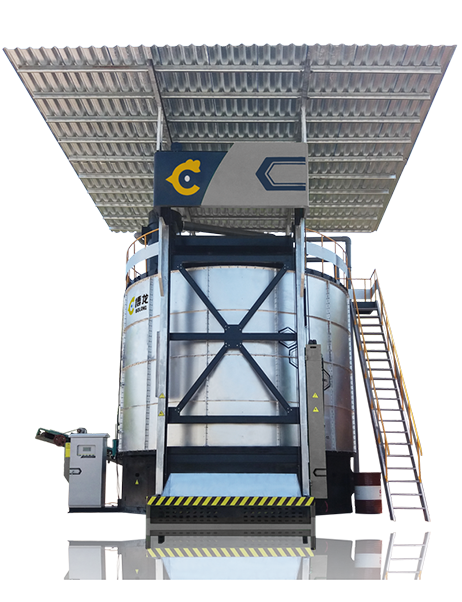
The value of manure depends on the quality of the treated output. Consider, for example, the third-party testing data for the actual output of Bolong animal manure fermentation equipment:
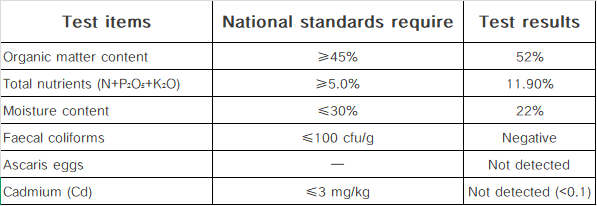
The organic matter content exceeds national standards by 15%, the total nutrient content is almost 2.4 times higher than the national standard requirement and all heavy metal levels are well below the permitted limits. Given this level of quality, the product meets sales requirements in most markets and complies with the EU's basic heavy metal limits for organic fertilisers. For farms planning to export, consistent testing data can serve as proof of compliance to present to clients.
Not all manure treatment methods are equal. Effective treatment must meet three conditions:
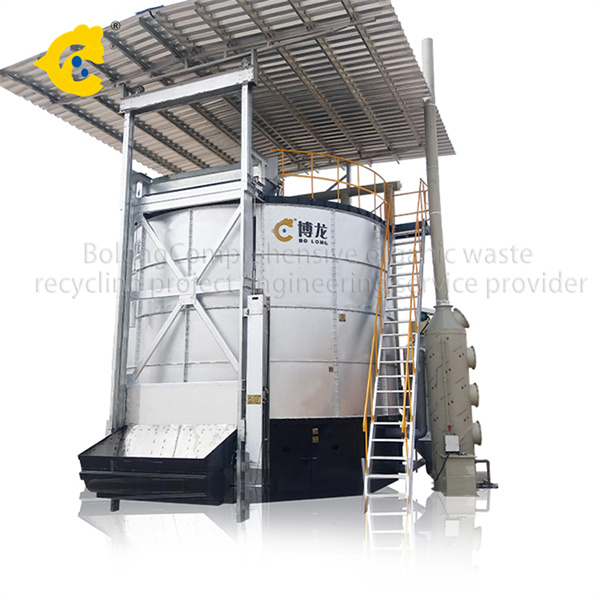
Achieve sterilisation standards. The U.S. EPA explicitly stipulates in Regulation 40 CFR Part 503 that material must be maintained at a temperature of ≥55°C for at least 72 hours in order to reliably inactivate pathogens such as Salmonella and E. coli. Traditional open-air composting suffers from significant heat loss at the surface, making it difficult to maintain temperatures above 55°C for extended periods. In contrast, the enclosed, insulated design of animal manure fermentation equipment enables internal temperatures to be maintained stably within the sterilisation range. This is the root cause of the safety disparity between the two methods in the final product.
Nutrient retention. Volatile nitrogen losses during processing directly determine the final nutrient value of organic fertiliser. Maturity is typically evaluated using the seed germination index (GI ≥ 85%) as a standard (Chinese National Standard NY/T 3046-2016). The enclosed environment of animal manure fermentation equipment effectively reduces ammonia volatilisation during fermentation, which is key to achieving more complete nutrient retention.
Heavy metal compliance. The EU Organic Fertiliser Regulation (EC) 2019/1009 sets clear limits on heavy metal content, particularly for cadmium and lead. For farms planning to export, testing for heavy metals in the final product must be included as a mandatory acceptance criterion when evaluating animal manure fermentation equipment.
The answer to this question is evolving.
A few years ago, manure treatment was primarily a compliance cost. However, with the rapid growth of the organic fertiliser market, rising chemical fertiliser prices and stricter regulatory requirements, the value proposition of manure treatment has shifted. Effective treatment is now seen as an infrastructure investment that generates ongoing returns, whereas inadequate treatment leads to three simultaneous pressures: unsellable products, accumulating compliance risks and persistently high labour costs.
While market opportunities are opening up, regulatory requirements are tightening. For farms that are undecided, 2026 is a critical milestone that warrants serious consideration.
Well-operated animal manure fermentation equipment delivers ongoing returns and is a worthwhile infrastructure investment. If you would like to discuss manure treatment solutions tailored to your farm's size, please contact us for a free assessment.












 Consultation


