An animal manure fermentation tank does one thing well. It converts raw animal manure into a finished organic fertilizer in a controlled, predictable manner. If you have a farm and want to stop paying to get rid of manure and instead make money off it, this is the equipment that makes the business case work.
In this article, we explain how an animal manure fermentation tank works, what makes the output valuable, and how to think about the investment.
Most farms treat manure as a cost. They pay to have it removed, or they use labor and fuel to collect and spread it. The economics of livestock farming have changed, and an increasing number of farm owners are asking a different question: can manure be sold?
The answer is yes, but only if the manure is managed properly. Raw manure is difficult to manage, smells bad and is not safe to sell. In contrast, composted manure is a recognized agricultural product with real market value. The difference between them is an animal manure fermentation tank.
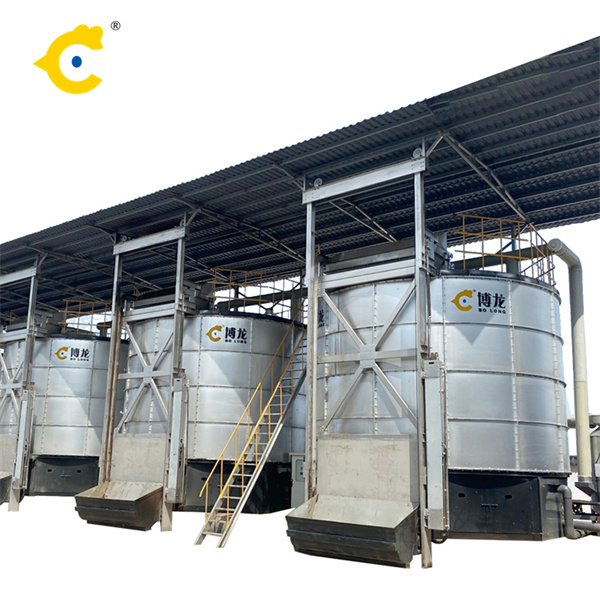
The manure fermentation tank for animals is a closed vessel with mechanical agitation, forced aeration and temperature control. The manure is loaded in, mixed and aerated. Internal temperatures of 55°C are reached within 24-48 hours and maintained for the necessary time.
It is this high temperature phase that creates value. It kills fecal coliform, ascaris eggs and most weed seeds, making the output safe to handle and apply. It also converts the organic matter into a stable humus that gives compost its soil-conditioning value.
The animal manure fermentation tank yields the finished organic fertilizer with uniform nutrient content and stable organic matter at day 7-10. The material is ready to be bagged, sold, or put on the fields.
Three things make finished compost a market product:
1、Nutrients. Total N+P 2 O 5 +K 2 O > 5% satisfies most national organic fertilizer standards. Bolong animal manure fermentation tank has an output with 11.9% total nutrients, more than two times the minimum.
2、Organic materials.The more organic matter, the greater the soil-conditioning value. Bolong animal manure fermentation tank produces material with 52% organic matter, far exceeding the minimum of 30% required by Chinese standard NY/T 525.
3、Security. Heavy metals within limits, Parasite negative, Pathogen negative. Bolong animal manure fermentation tank offers all three. Verified by third party testing.
It is the interaction between these three things that turns the outcome into a sellable product and not a waste material.
An animal manure fermentation tank is a capital investment, but it will pay for itself in most cases:
1、Direct income. Most markets have finished organic fertilizer at $50-150 per ton, depending on quality and region.
2、Cost avoided. Less labor, less land for composting, less environmental compliance risk.
Faster cycling.7-10 days vs 60-90 days means more batches per year, faster cash flow.
The animal manure fermentation tank typically pays back its capital cost in 2–3 years for a mid-sized layer or pig farm that produces 10+ tons of manure per day, combining direct revenue and cost avoidance.
1、Can I sell the output of an animal manure fermentation tank directly?
In most markets, yes. The output of a properly operated animal manure fermentation tank meets organic fertilizer standards and can be sold to crop farmers, garden centers, or agricultural distributors.
2、Do I need a license to sell the fertilizer?
Requirements vary by country and region. In China, the output of an animal manure fermentation tank meeting NY/T 525 standard can be sold as organic fertilizer. In other markets, check local regulations.












 Consultation


