India is home to 535 million livestock - the largest population of any country on Earth. It holds 19.46% of the world's cattle and 59.29% of the world's buffalo. With 1,098 million tons of cattle dung produced every year, plus poultry waste from over 800 million birds, the scale of India's livestock manure problem is unmatched.
For decades, the default response has been open composting - pile it up, let it rot, spread it on fields. But with the world's largest herd and a monsoon climate that dumps months of heavy rain and humidity onto those piles, traditional methods are breaking down. The numbers are too big, the climate too wet, and the environmental pressure too high for the old approach to keep working.
Three factors make India's livestock manure problem uniquely difficult compared to other major livestock economies:
Scale. No other country has as many animals as India. India's 535 million livestock produce manure at a rate that exceeds the capacity of traditional composting methods to absorb it. Dairy production alone is enormous - it is expected to reach 216.5 million metric tons by 2025, driven by millions of small and medium-sized farms. Every litre of milk produces kilograms of dung that need to be handled.
Climate. India's monsoon season runs from June to September, bringing extreme humidity and heavy rainfall to the country's agricultural regions. Open compost piles cannot cope with this. High humidity oversaturates the material, creating anaerobic zones that emit methane and odour. Rainwater also leaches nutrients into nearby water sources. Pathogens that would die in a dry, hot pile survive and multiply in wet conditions. Research on windrow composting confirms this pattern: prolonged exposure to high humidity degrades quality and increases odour.
Structure. Unlike vertically integrated poultry and swine operations in Brazil or the United States, India's livestock sector is dominated by smallholders. There are millions of farms with two to ten cattle or a few hundred birds each. Coordinating centralised waste treatment at this scale is logistically impossible, so the solution must be accessible at farm level or through cooperative models.
The traditional approach - pile manure in an open area, turn it occasionally, wait 60 to 90 days - worked when animal density was lower and regulatory scrutiny was lighter. That has changed.
Residential areas expanding around dairy and poultry clusters are complaining more and more about odors. Water pollution thru manure runoff during monsoon is a new threat to public health. Demand for quality controlled organic fertilizer is growing faster than supply, thanks to the Indian government’s push toward natural and organic farming, including the National Mission on Natural Farming.
Open composting does not meet the quality standards needed at the scale India needs. It's incompatible with commercial organic fertilizer production because of inconsistent nutrient levels between batches, poor pathogen kill during wet months, and months-long turnaround times. Alternatively, an animal manure fermentation tank can be used.
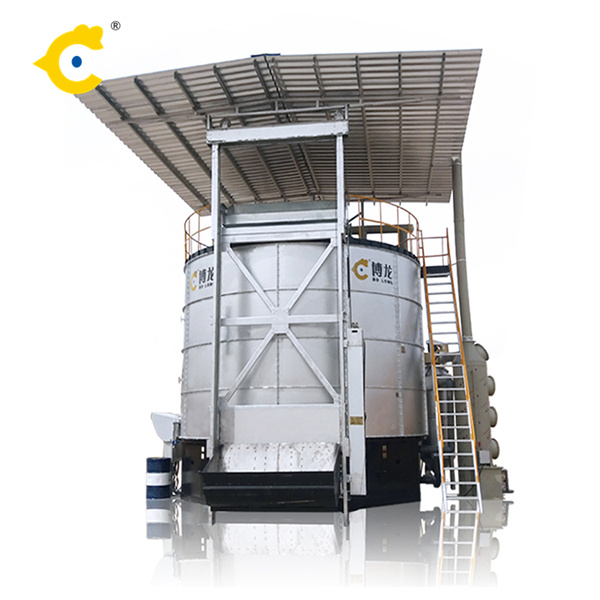
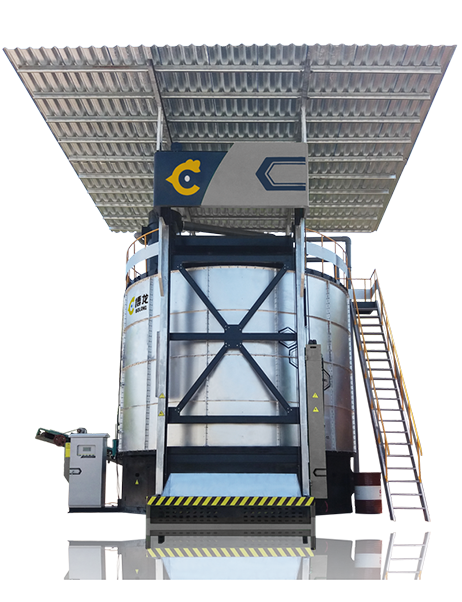
An animal manure fermentation tank replaces months of open-air decomposition with controlled, high-temperature aerobic fermentation inside a sealed vessel. The process takes approximately 7 days from loading to finished fertilizer.
Inside the tank, temperatures are maintained around 55°C - the thermal threshold at which pathogenic bacteria, parasite eggs, and weed seeds are destroyed. Unlike open piles, which cool and reheat unpredictably depending on weather and turning frequency, the tank's enclosed design keeps temperature, oxygen, and moisture at optimal levels regardless of external conditions.
This matters enormously in India's climate. During monsoon, when open composting is at its worst, an animal manure fermentation tank operates at full capacity - dry, controlled, and consistent. The tank's waste heat recovery system captures thermal energy from the fermentation process, reducing overall energy consumption.
The technology is already on the ground. Bolong has installed an animal manure fermentation tank at a customer site in India, built to operate through monsoon humidity and variable feedstock conditions. The tank is in place, the setup is complete, and commissioning is underway.
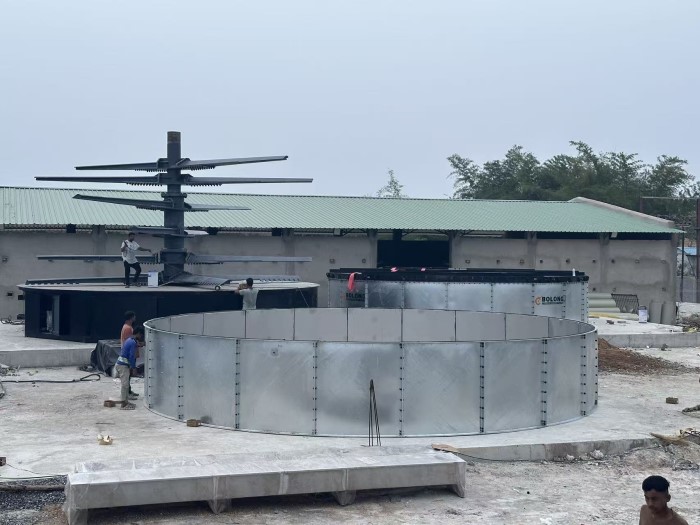
For Indian dairy cooperatives, poultry integrators, and large-scale farms watching this project, the value proposition is clear. One operator runs the system. The enclosed design keeps odor controlled, and the sealed process prevents monsoon rainwater from leaching nutrients into groundwater. Instead of a daily disposal headache, manure becomes a manageable output stream - processed in 7 days, ready for field application or sale.
India's livestock manure problem is a direct consequence of its success as the world's largest livestock producer. The same animals that make India the top milk producer and a rising poultry and meat exporter also produce waste that cannot be ignored any longer.
An animal manure fermentation tank turns that waste into fertilizer in 7 days - faster than any open pile, more consistent than any manual process, and resilient against the monsoon conditions that defeat traditional composting year after year. With the government promoting natural farming and organic inputs, the market for high-quality manure-based fertilizer is only going to grow. The farms that process their manure now will be the ones supplying it.
Does the system work in India's hot and humid climate?
Yes. The enclosed design means external humidity and rainfall have no impact on the fermentation process. Ambient warmth in India's tropical regions actually reduces the energy required to reach and maintain the 55°C target temperature.
What types of manure can it process?
Cattle dung, buffalo dung, poultry litter, and pig manure are all compatible. Feedstock can be adjusted with auxiliary materials like crop straw or sawdust to optimize the carbon-to-nitrogen ratio.
India has the animals. It has the manure. What it needs is a faster way to process it. Contact Bolong to discuss your farm's daily waste volume and get a tank recommendation tailored to your operation.












 Consultation


