Spread fresh manure on a field, and for a week or two the soil looks richer. Then seedlings yellow. Roots fail to establish. Weeds appear in places they have never grown before. What looked like free fertilizer has started working against the crop — and the damage often gets blamed on weather, pests, or the wrong fertilizer blend, when the real problem was the manure itself.
This is not a rare scenario. Farmers who apply unprocessed manure are working with a material that can burn crops, harbor pathogens, and lose nutrients faster than the soil can absorb them. An aerobic fermentation tank exists to fix these issues before they reach the field — not after.
Fresh manure from cattle, pigs or poultry contains four things that no farmer wants in a field where crops are growing: active pathogens, viable weed seeds, concentrated ammonia and an odour that attracts flies from across the property.
The pathogens are the most immediate concern. Faecal coliforms, Salmonella and E. coli can survive in raw manure for weeks or even months depending on the temperature and moisture levels. In warm, moist soil, some species can remain viable for up to 90 days. In cooler climates, survival is prolonged - the cold preserves what heat would otherwise break down. When manure containing these pathogens lands on soil where leafy greens or root vegetables are growing, the pathogens transfer directly to the edible portion. Food safety standards and retailer protocols increasingly require withdrawal periods of between 90 and 120 days between the application of raw manure and the harvest of crops that come into contact with soil. For farms selling to retailers that undergo third-party audits, raw manure is increasingly seen as a liability rather than an asset - the documentation burden alone pushes many growers towards treated alternatives.
Weed seeds pass through animal digestive tracts largely intact. Many common weed species produce hard-coated seeds that survive digestion and germinate once spread onto fields. A single application of raw manure can introduce thousands of viable weed seeds per square metre, creating an additional weed management problem alongside the decision about fertiliser, and one that persists for years as the seed bank builds up.
Then there is the risk of burning. Raw manure releases ammonia as it breaks down, and concentrated ammonia around young roots causes tissue damage that resembles over-fertilisation: yellowing and stunted growth. In severe cases, the plant dies. The nitrogen is present, but in a form and concentration that the crop cannot handle. This is the gap that an aerobic fermentation tank is designed to close by neutralising the ammonia spike before the manure leaves the vessel.
The part that surprises most farmers is that raw manure is not as nutrient-rich as it seems because much of its nitrogen never reaches the soil.
Ammonia volatilisation begins within hours of spreading the manure. If manure is left on the surface or incorporated only shallowly, nitrogen will escape as ammonia gas. The darker the manure and the stronger the smell, the more nitrogen is escaping. That odour is not just unpleasant — it is the fertiliser evaporating. By the time the crop begins to absorb nutrients, a substantial portion of the nitrogen has already evaporated.
What remains is unstabilised organic matter. Its carbon-to-nitrogen ratio fluctuates, the release of phosphorus and potassium is unpredictable, and the soil microbiology must complete the decomposition process before any nutrients become available to plants. In cold or dry conditions, this decomposition process stalls and the manure sits in the field, doing little for the crop while continuing to lose nitrogen.
Farmers who test their soil after applying raw manure often notice a pattern: phosphorus accumulates while nitrogen disappears. Phosphorus binds to soil particles and builds up over successive applications, eventually reaching levels that trigger concerns about environmental runoff. Meanwhile, nitrogen was never present for long enough to contribute. The result is an imbalanced soil profile — too much of one element and not enough of another — produced by a material that was intended to be a complete fertiliser.
An aerobic fermentation tank can address this issue. By controlling the temperature and airflow within a closed vessel, nitrogen is stabilised into organic forms that are released steadily rather than volatilising, while preserving phosphorus and potassium in a plant-available matrix. The output is not more nutrients, but rather the same nutrients kept rather than lost.
As the nutrient availability of raw manure is unpredictable, the natural response is to apply more. If the last load seemed ineffective, the next one is heavier. This is how fields end up being overloaded.
Excess manure raises soil salt concentrations to levels that inhibit root water uptake, which is the same mechanism as that caused by drought stress. Runoff carries phosphorus and nitrogen into waterways. Nitrogen leaches past the root zone into groundwater. Years of work building up the soil structure can be undone by repeated heavy applications of wet, high-moisture material.
Regulators are paying closer attention. Nutrient management plans in many regions now require farmers to account for every unit of nitrogen and phosphorus applied. The unpredictable availability of raw manure makes this difficult. If inspectors ask how much nitrogen you applied and you can only provide an estimate, this constitutes a documented deficiency that can affect your operating permits.
The logic behind over-application is understandable: without a reliable nutrient profile, applying more feels safer. However, more raw manure does not mean greater fertility; it means more salt, greater runoff risk and greater variability from season to season. The aerobic fermentation tank removes that guesswork. The fermented output has a known nutrient profile, so you only need to apply the correct amount once.
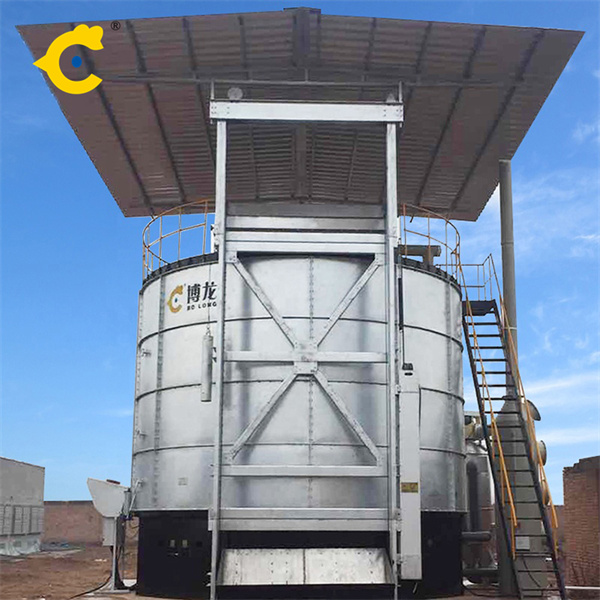
The difference between raw and fermented manure is not merely a matter of degree. It is a change in the material's composition - it becomes biologically stable, free of pathogens and able to preserve nutrients.
Inside an aerobic fermentation tank, the temperature rises and is maintained at a level that eliminates faecal coliforms and inactivates weed seeds. Aerobic fermentation also alters the chemistry. At a controlled temperature, microbial metabolism converts volatile nitrogen into stable organic forms that are bound within the cellular structure of the finished material. This means that it is released slowly as soil microbes mineralise it over weeks rather than volatilising in days. The total nutrient profile - including phosphorus, potassium and micronutrients — is preserved in a matrix that the soil can absorb without an ammonia spike.
The physical characteristics change as well. Raw manure is wet, heavy and uneven in consistency, making it difficult to spread uniformly and prone to clumping. In contrast, fermented output is drier, lighter and crumbly, meaning it can be spread evenly, incorporated into the soil quickly and does not create wet spots that lead to localised salt and ammonia concentration. Output from an enclosed aerobic fermentation tank smells like earth rather than waste, which is important not only for the comfort of farmers, but also for neighbour relations and fly control around the facility.
In short, by the time the manure is ready for use in the field, it is no longer the same material that would burn seedlings or introduce pathogens. It is stable, tested and ready for the soil to use immediately.
If you are still spreading raw manure, the question is not whether these risks apply to your operation — it is which one will show up first. Seedling burn this season. A food safety flag from a buyer. A weed population that suddenly gets worse. Or the slow, invisible one: nitrogen you thought you added, gone before the crop could use it.
An aerobic fermentation tank resolves all of them in a single step. Pathogens eliminated, nitrogen stabilized, weed seeds destroyed, odor significantly reduced.
Tell us what you are growing and how you currently handle manure. We will show you what fermented output looks like for your operation — and what changes in your soil from the first cycle. Not next season. Not after a soil test confirms what went wrong. From the first cycle — because the manure that reaches your field is already safe, already stable, and already tested.
1、How long does it take for the aerobic fermentation tank to make raw manure safe for field application?
Each cycle runs 7-10 days. During that time, temperature sustains at 55°C for several consecutive days — the threshold that eliminates fecal coliforms and renders ascaris eggs undetectable.
2、What is the nutrient content of the finished fertilizer?
Tested output shows 52% organic matter and 11.9% total nutrients (N + P₂O₅ + K₂O), with 22% moisture content. Heavy metals fall well below national safety limits.
3、What model sizes are available?
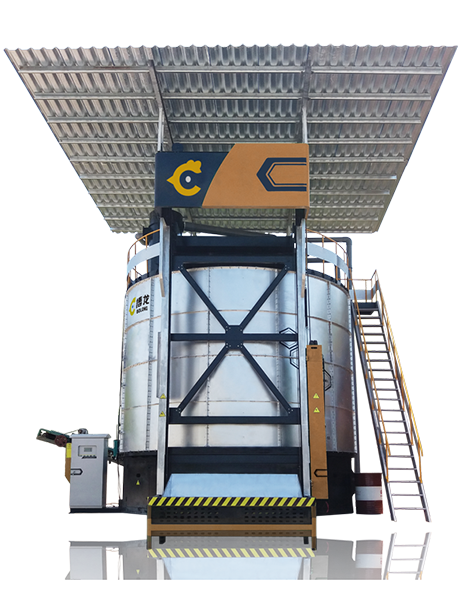
The standard range covers 102–280 m³ of working volume. Daily manure volume and site footprint determine which model fits your operation.
4、Can one fermenter process manure from different types of livestock?
Yes. The fermenter handles cattle, pig, and poultry manure. Operating parameters adjust to material characteristics such as moisture, bedding content, and carbon-to-nitrogen ratio.












 Consultation


