Most chicken manure problems start with water. A drinker leaks, a humid week arrives, and manure that was crumbly on Monday is sticky by Friday. Before any of it goes into animal waste fermentation equipment, spend a few minutes finding out what you are actually loading.
Bolong fermentation tank generally takes manure at 65% moisture or below. Wetter than that is not a dead end, but it needs a decision. These four checks make that decision easier.
Wet manure rarely has just one cause. For example, a leaking drinker line can put water straight into it. Similarly, a damp roof edge or poorly ventilated corner can make the litter damp. Rainy or humid weather prevents manure from drying out inside the house. The housing system also matters: manure that sits on the floor mixed with litter behaves differently to manure that is often removed, and how long it is left before collection affects the end result.
Walk around the house bearing in mind the moisture levels. Look under drinker lines and check damp corners, noting which areas produce the wettest manure. Fix any issues at the source before the moisture ever reaches the animal waste fermentation equipment. The easiest moisture to deal with is moisture that was never added in the first place.
Start with your eyes and hands. Manure that crumbles but holds its shape without releasing water is usually fine. Manure that forms hard clumps, drips or sits in standing liquid is probably past its best.
Then get a number. A measured moisture figure is better than a guess, and it is the first thing we will ask for. Take the sample from more than one spot because the surface of a pile dries faster than the middle. Measure in the same way each time so that the figures can be compared. The reason this matters is simple: fermentation requires air and heat to circulate through the material. Wet manure packs down, mixes poorly and is harder to keep aerated, so the process slows down.
If the manure is within range, load it into the animal waste fermentation equipment. If it is wet, reduce its moisture content first. The amount of preparation required depends on the manure's condition and the housing system it came from, and this can vary from batch to batch. A batch that is slightly wet is different from a batch that is dripping. Do not guess. Send us the details and we will help you decide.
The tank can handle difficult materials. Its blades can handle solid-solid and solid-slurry mixing, and can cope with sticky, viscous manure that is difficult to turn in an open pile. However, tolerance is not a reason to ignore moisture. Even in well-built animal waste fermentation equipment, a batch that is far too wet will still slow the process.
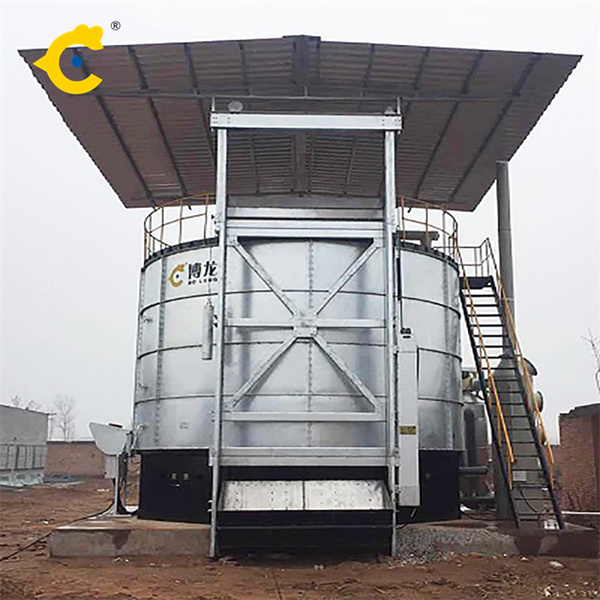
The design of this animal waste fermentation equipment is particularly effective with wet manure. The internal mixing blades keep the material moving so that it does not settle into a dense, compacted mass. A heat exchanger uses the heat from the warm exhaust air to warm the fresh air entering the tank through holes in the blades. This warm air speeds up fermentation and helps to evaporate the excess moisture that wet chicken manure contains.
The tank is loaded via a hopper which is carried to the top by a hydraulic lift, and finished organic fertiliser is produced at the bottom every day. On average, organic waste becomes fertiliser in about seven days. An automatic control system runs the process, so there is no need for anyone to turn the piles or monitor the temperatures manually.
A few simple habits can make subsequent batches easier for the animal waste fermentation equipment to treat. Keep collected manure covered to prevent rain from adding moisture while it is waiting to be processed. Load it promptly instead of letting it sit and absorb moisture. Fix any leaks in drinkers as soon as you find them and keep wash water away from the collection point. Then, every week or two, write down a moisture figure, along with the weather and any changes to the house. After a few months, the log will show you which weeks are problematic and what caused them.
Wet chicken manure tends to smell worse. When wet material is compacted, air cannot circulate properly, resulting in a stronger ammonia and sulphur compound smell. This is another reason to deal with moisture before loading animal waste fermentation equipment rather than afterwards.
Exhaust from the tank passes through a deodorising system comprising ammonia water absorption, an activated carbon filter and odour-removing microorganisms. The operator keeps the water temperature below 35°C to ensure the microorganisms remain active and refills the water when the level drops.
The yard stops collecting soggy piles. Manure goes in every day and fertilizer comes out every day, so nothing waits for a batch to finish. A farm running animal waste fermentation equipment ends up with a daily routine instead of a wet-weather backlog: collect, check the moisture, load, take away the fertilizer.
1、Does rain affect the manure once it has been loaded?
No, because the tank is a vertical, enclosed structure that operates effectively across a wide range of climates, including humid and very cold regions. Rain does matter before loading, which is why covering it up helps.
2、Do I need a lab test before I enquire?
No, a moisture figure from a simple check on a representative sample is enough to start with, as is a plain description of what the manure looks and feels like.
3、Not sure how wet your manure is?
Send us what you have: a moisture figure, a description of what the manure looks like, information about the housing system it comes from, your daily volume, your climate and how much your flock may grow. Click here to get a quota, and we will help you determine whether it can go straight into animal waste fermentation equipment or if it needs to be prepared first.












 Consultation


